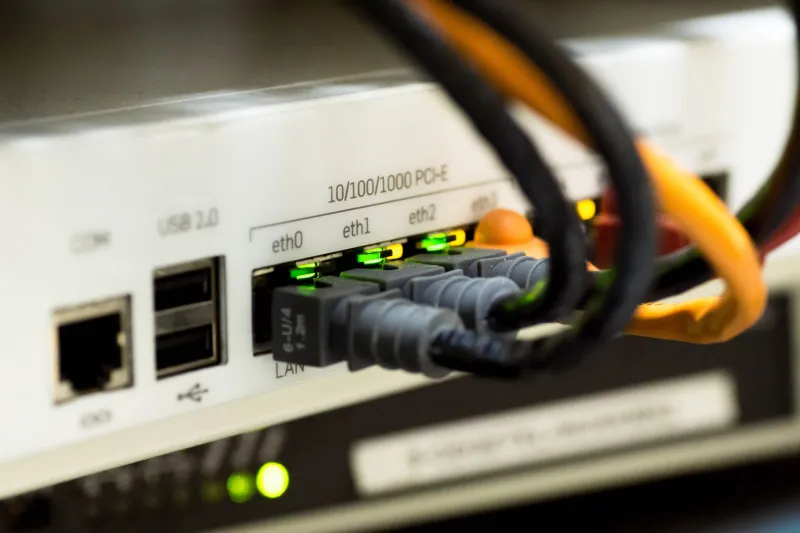
We Switched the Router Off at Ten Every Night for a Month — Here's What Actually Broke
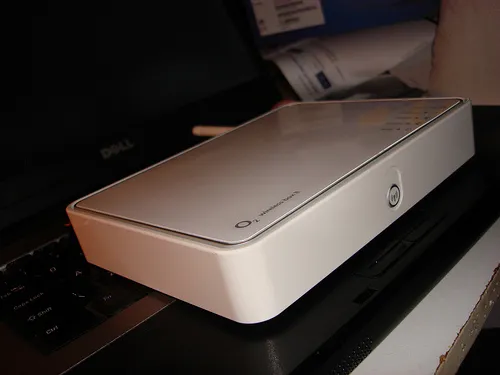
Photo: Mhamzahkhan at Flickr, CC BY 2.0, via Wikimedia Commons
The rule went up on the fridge in block capitals: ROUTER OFF AT 10. The logic was sound enough. Nobody in this house needs to be streaming at half ten, the kids' phones would stop being interesting, and the whole thing would save a few watts. Calm, cheap, self-enforcing.
Then we actually did it, for a month, and kept a notebook. Here is what happened, roughly in order.
The setup, so you can judge whether it applies to you
Victorian mid-terrace, Virgin Media fibre into a hub in modem mode, a two-node mesh behind it, roughly eighteen connected things. Heating on tado, a video doorbell with local storage, two smart plugs, a printer, three Echo speakers, a washing machine that talks to an app, plus two work laptops and the usual phones and consoles. Nothing exotic. If you live in a UK home built before 1930 with a mix of old wiring and new gadgets, this is probably your house too.
Week one: the bit everyone tells you about
Sleep improved. I am not going to pretend I know why. It might be the absence of notifications, it might be the fact that the rule forced the phones onto the hall table rather than the bedside, and it might be the placebo effect of feeling smug. My honest read: the router was never the problem. The boundary was. Curfewing the router curfewed the humans, and the humans were the noisy part.
The house did get quieter, in a literal sense. No fan in the cupboard under the stairs, no faint electrical hum from the mesh node in the hallway. Small, but noticeable at 11pm when you are trying to get a toddler down.
Week two: the things that quietly fell over
This is where the notebook earns its keep.
Overnight updates stopped happening. Printers, doorbells, the vacuum, the washing machine — they all want a quiet window to phone home and pull firmware. Take the window away and they simply do not update. Not a disaster in a month, but a device that has not updated since September is a device that will one day ask you to do it manually at the worst moment.
App-scheduled things simply did not run. The washing machine's delayed start was fine, because it lives on the machine's own dial. The dishwasher's cheap-rate slot was not, because it lived in an app that pushes the command at 00:30. Same story with a couple of lighting scenes and one Alexa routine that turned the hallway lamp off. Anything that exists only in the cloud dies with the connection; anything programmed onto the device itself survives. That distinction turned out to matter more than any other finding.
The heating kept going, but only just. The tado schedule is stored on the thermostat as well as in the cloud, so the radiators still did their thing overnight and the house was warm at 6.30am. But the app was a brick until the mesh came back up, and the geofencing that normally switches the heating off when we both leave stopped working. That was fine for a month at home. It would not be fine in a cold snap with someone away.
Week three: the doorbell, the landline and the school run
The doorbell records locally to a card, so footage survived. Notifications did not. A parcel arrived at 6.12am one morning and we found out about it via a card through the letterbox. Cloud uploads of that clip appeared, oddly, two days later.
The bigger one was the landline. We run a VoIP number through the broadband for an elderly relative who will not use a mobile. Calls after 10pm went straight to voicemail. Over a month, three of them did. None were emergencies, and all of them were followed by a slightly wounded text the next morning asking if we were alright.
The school run had a near miss too. The kids' Alexa alarms are set on the device and they fired fine. The routine that reads out the weather and the bus times did not, so we left the house without knowing about the roadworks on the A-road. Minor, but it is exactly the kind of thing you install the kit to avoid.
What did not break, despite predictions
Plenty of people warned us the ISP would notice, the line would degrade, or the parental controls would be bypassed. None of that happened. Your broadband contract has nothing to say about your router's bedtime, and switching off the hub does not upset the line in any way that matters.
Parental controls are worth a note, though. Filters like Sky Broadband Buddy or Virgin Media's Child Safe sit at the router, so switching off at 10pm does not weaken them — it strengthens them, by removing the connection entirely. The hole is mobile data, which has always been the hole, and which no router rule was ever going to close.
The morning after, every morning
Reconnection was never instant. The mesh came up in about two minutes, the phones within three, and the doorbell was consistently last, sometimes taking fifteen. For the first hour of the day, the house was about 80% itself. If you rely on a smart thermostat to pre-heat a cold house before a 6am start, that 80% is worth thinking about.
What we kept, and what we binned
We did not keep the full curfew. What survived was a narrower version: the guest network and the kids' devices go off at 10pm, the main network stays up, and the adults' phones go on charge in the hall. That gets most of the sleep benefit, none of the missed calls, and the doorbell still catches the early van.
If you want to try the full version — and it is worth doing for a fortnight just to see what your house depends on — set the schedule in the router rather than unplugging it, so it comes back reliably. Keep the fibre box and the mesh nodes powered. And before you start, walk around and ask which of your gadgets is doing its real work at 2am.
Some of them are. That is the whole lesson.