The Spring Swap, the Autumn Tap: A Two-Date Battery Habit for a Calmer Home

December has a talent for exposing weak batteries. The smoke alarm chirps at 2am. The doorbell chime gives up halfway through a delivery. The thermostatic radiator valve in the spare room starts ignoring the schedule, and the keypad by the side door becomes a guessing game. It is not a conspiracy. It is what happens when a collection of small cells has spent months quietly losing voltage, then meets cold nights, closed doors, extra cooking and a house full of people.
Why the pre-Christmas failure is so predictable
Most battery-powered home devices do not fail dramatically. They fade. A smoke alarm may sit happily for months, then emit its low-battery chirp when the voltage dips under load — often at night, when the house is cold and quiet. A wireless doorbell or keypad gets more use when guests arrive. A radiator valve wakes up for the heating season and starts driving its little motor again. A door contact on a shed or garage faces damp and low temperatures that make a cheap cell look older than it is.
So the December failure is rarely bad luck. It is the end of a long, slow decline that nobody noticed because the device was still working. The low-battery warning is the last gasp, not an early warning. By the time you hear it, you are already in the worst possible mood to hunt for a CR2032 in a kitchen drawer full of takeaway menus and dead AA cells.
The two dates that do the work
A six-month battery sweep sounds grand. In practice it is two diary entries.
Spring swap: the last weekend in March, or the first weekend in April. This is when you replace the user-serviceable cells in the devices that need a planned change — smoke and CO alarms that take replaceable batteries, door contacts, radiator valves, wireless chimes, keypads and any sensor that has been on the same cell since the last cold season. While the cover is off, write the date inside it and log the device. If an alarm has a sealed ten-year battery, do not open it. Note the expiry date on the unit and put a reminder in your phone for the replacement year.
Autumn tap: the weekend the clocks go back, or the first weekend in October. This is the audit. Walk round the house and test every alarm with its test button. Check the app or display for each smart device. Look at the dates you wrote in spring. Replace anything that is due, anything already showing low battery, and anything that has been sitting in a cold outbuilding. Update the log and set the next spring reminder. If you are reading this in mid-November 2026 and the autumn date has already passed, do a quick catch-up this weekend. Better late than at 11pm on a Sunday.
The point is not to change every battery twice a year. That is wasteful and teaches you nothing. The point is to have one date for replacement and one for testing and auditing, so the house is not relying on a chirp to tell you what it needs.
A rough battery map
Always follow the manufacturer first. These are the common patterns:
- Smoke and CO alarms: many modern units have a sealed lithium battery that lasts the life of the alarm. Do not try to prise it open. Note the expiry and replace the whole unit when due. Older or cheaper alarms may take a 9V or AA battery. Use the chemistry the maker specifies — often alkaline, sometimes lithium. Do not fit rechargeables unless the manual explicitly allows it.
- Door contacts and window sensors: usually CR2032 coin cells or AAA batteries. A branded lithium coin cell is often a better choice for a cold shed or garage than a cheap zinc-carbon cell, but check the device manual. Cheap cells can leak and corrode the contacts.
- Thermostatic radiator valves: many take AA batteries, and some are fussy about voltage. Alkaline is the usual safe default; lithium may suit cold rooms if the maker permits it. Check the contacts for corrosion while you are in there.
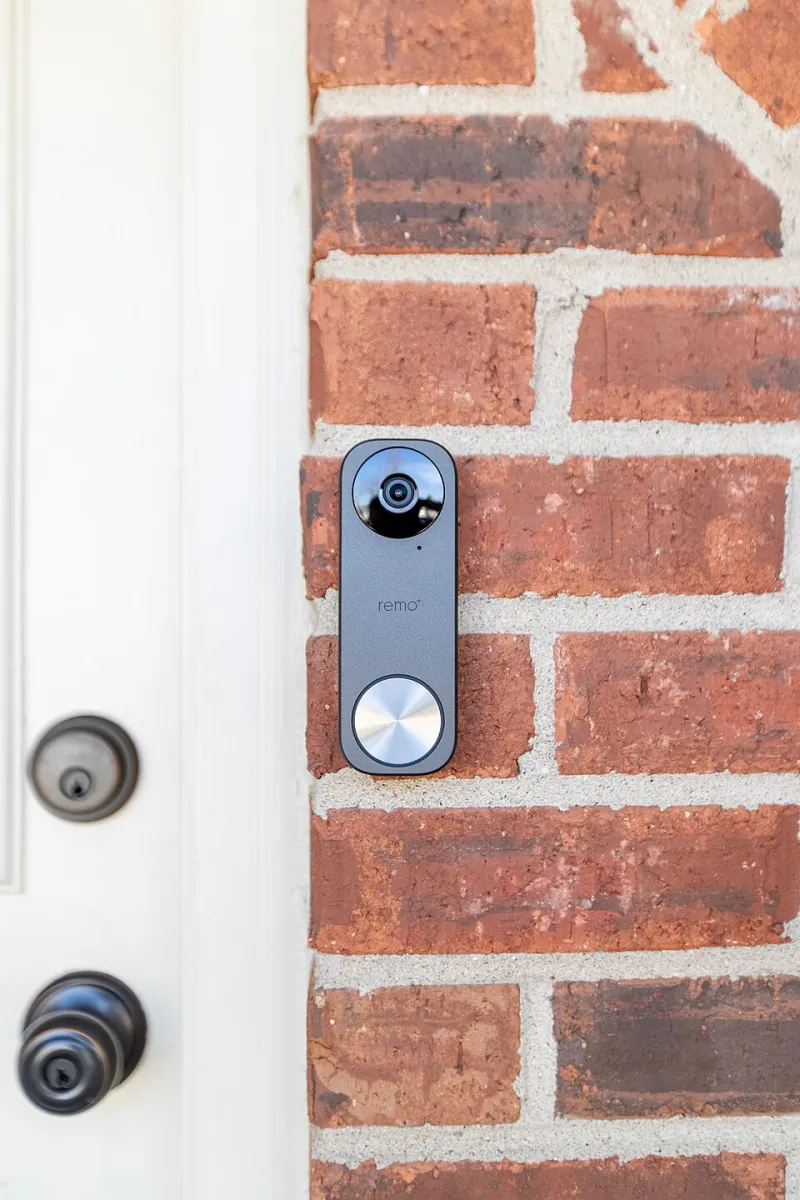
- Wireless doorbells and chimes: CR2032, AA or AAA depending on the model. The outdoor push button is the one that suffers most from damp and cold, so check it in autumn even if the indoor chime is fine.
- Keypads and small control panels: often AA or AAA. These are easy to forget because they live by a door and only get noticed when they stop working.
Do not mix old and new cells in the same device. Do not put a cheap cell in a life-safety alarm to save 40p. And do not remove a smoke alarm battery to silence a chirp and then forget to replace it. If an alarm is sealed and faulty, replace the unit or report it if you rent.
Label the cell, not your memory
A battery log does not need to be a spreadsheet. A shared note on your phone is fine. Use five columns: device, location, battery type, date fitted, next check. Add a photo of the inside of the alarm or sensor cover if you want extra insurance. A strip of masking tape inside the cover with 'Fitted 04/2026 — next check 10/2026' is surprisingly effective.
This matters most for the devices you rarely see: the CO alarm near the boiler, the door contact on the garage, the keypad by the side gate. Without a date, you are guessing. With a date, you can see at a glance whether the cell is two months old or two years old.
The 11pm Sunday problem
Keep a small labelled box of spares: AA alkaline, AAA alkaline, CR2032, a couple of 9V cells if you need them, and a small torch. Store 9V batteries so their terminals cannot touch metal in the drawer. When something chirps at night, you want the correct cell in your hand, not a trip to a petrol station.
Then update the log the next morning. A battery change without a date is just a future mystery.
The routine is deliberately boring. That is the appeal. Spring swap, autumn tap, label and log. It takes less time than one panicked December evening, and it keeps the smoke alarms, sensors and smart bits of the house doing their actual job: being quiet until you need them.