Where the Battery Sleeps: Building a Safe, Metered Charging Shelf at Home
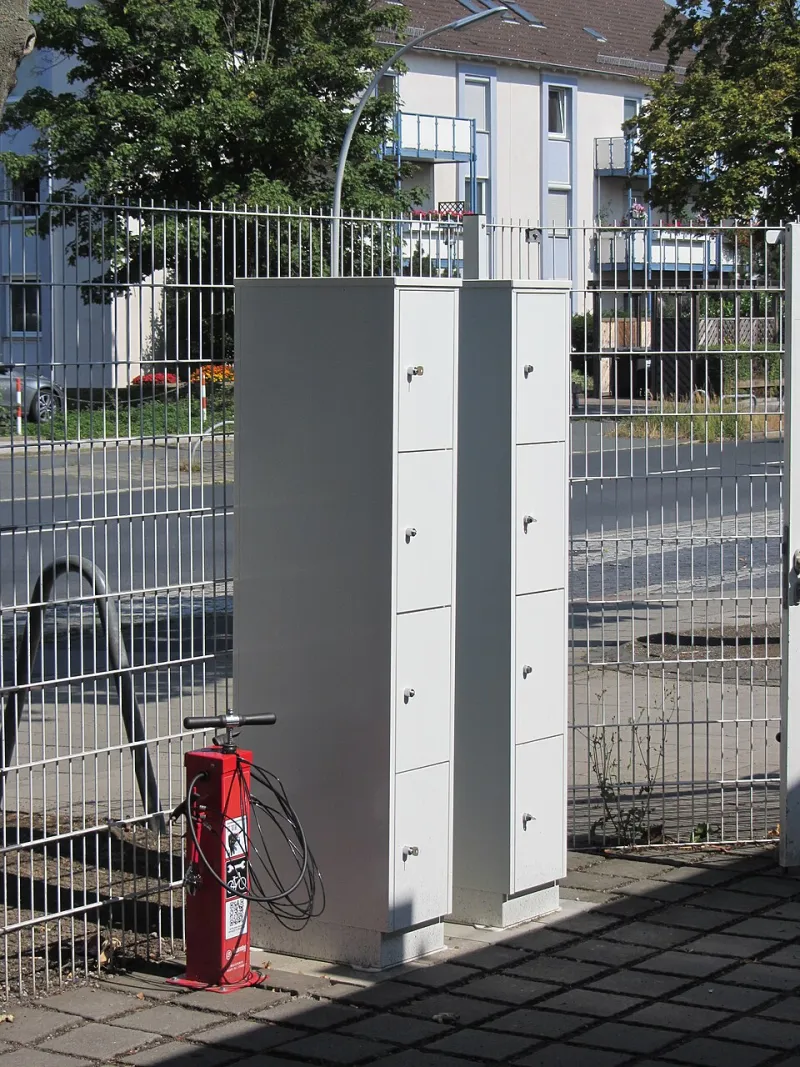
Photo: Velotopist, CC BY-SA 4.0, via Wikimedia Commons
There is a moment in every busy household when the e-bike battery, the scooter charger and three drill packs all end up in the same place: the hallway floor, next to the coat rack, quietly sipping electricity. It feels convenient. It is also the least sensible spot in the house for a lithium-ion battery to spend the night.
A dedicated charging shelf does not need to be fancy. It needs to be boring, repeatable and slightly fussy about where things live. Think of it as a small hotel for batteries: check-in rules, a meter on the wall and a clear policy on when guests have overstayed their useful life.
The hallway is a lovely place for a fire
Hallways are escape routes. They are usually full of things that burn well — coats, shoes, bags, the paper recycling you meant to take out. If a battery pack starts venting heat and smoke, the last thing you want is for it to be blocking the front door or filling the stairs with smoke.
Lithium-ion fires are not like a chip-pan fire. They can reignite, and a standard extinguisher may not cool the cells enough to stop the reaction. The practical answer is not heroics. It is prevention, early warning and a clear exit. That starts with moving charging out of the hallway and away from soft furnishings.
Pick a spot that can take a joke
A utility room, garage or a dry shed is usually better than a hallway. You want a hard, non-combustible surface — a concrete floor, a paving slab, a metal tray or a ceramic tile offcut. You want ventilation, but not a draught that tips the charger off a shelf.
Avoid charging directly under stairs, in a sealed cupboard or anywhere the battery can get hotter than it already does. Avoid freezing sheds in January; cold charging is not kind to cells. A garage that stays above about 5°C is a reasonable compromise for most packs, but check the manufacturer's temperature range rather than guessing.
Keep the charging spot at least a metre from anything soft, and do not charge on top of a washing machine, freezer or anything that vibrates. A shelf bolted to a solid wall, with a lip to stop packs sliding off, is a good start.
The kit that earns its shelf space
You do not need a laboratory. You need a few cheap, unglamorous items:
- A non-combustible charging surface. A concrete slab or metal tray costs very little and contains small spills and heat.
- A timer plug. A mechanical timer or a smart plug with a schedule stops a charger from sitting at full for hours after the pack is done. Check the plug's rating against the charger's load; do not put a 3kW load through a 10A smart plug.
- A heat alarm. In a garage or utility room, a heat alarm is often more useful than a smoke alarm because it is less likely to be triggered by dust or steam. Interlink it with the house alarms if you can.
- A fire-resistant storage box for storage only. Do not assume a sealed box makes charging safe; many are designed for transport, not for a charging pack. If you use a bag or box, follow its instructions and never cover a charger.
- Cable labels and Velcro ties. Label each charger with the device it belongs to and the date you bought it. It saves the classic 'which brick is this?' hunt.
- An energy-monitoring plug. This is the metered bit. It lets you see how much energy goes into a charge and spot a pack that is suddenly drinking more than it used to.
Power without the daisy chain
One charger, one socket. That is the rule. Do not run a charger from a daisy-chained extension lead, and uncoil extension leads fully if you must use one. Check the charger's input rating and the plug's rating; if the charger pulls close to the limit, use a plain wall socket rather than a smart plug.
Charge during the day when you are at home, not overnight while everyone is asleep and not while you are out. If you use a timer, set it to finish before you leave or before bedtime. The aim is not to babysit the charger; it is to make sure someone would notice if it misbehaved.
Use the charger that came with the device, or a manufacturer-approved replacement. A cheap universal charger with the wrong voltage or cutoff behaviour is a false economy. If the charger gets hot enough to be uncomfortable to touch, stop using it and replace it.
Meter it like a grown-up
A metered charging shelf is not about spreadsheets for their own sake. It is about knowing what normal looks like. Note the energy used for a typical charge — a plug-in energy monitor will show kWh — and roughly how much range or runtime that gives you.
Over time, a healthy pack will use slightly less energy per charge as its capacity fades. That is normal. What is not normal is a pack that suddenly takes much longer to charge, gets much hotter than usual, or gives noticeably less range after a full charge. A monthly note on your phone is enough: date, device, kWh used, estimated range or runtime, and anything odd.
If you have a smart plug that reports energy, use it for the charger and keep the history. It is a simple early-warning system, and it costs nothing extra once the plug is there.
The monthly ten-minute check
Once a month, do a slow lap of the charging shelf:
- Unplug everything and let it cool.
- Look at each pack for swelling, splits in the case, a bulging base or a case that no longer sits flat.
- Smell for a sweet, solvent-like odour. If you smell it, stop using the pack and move it outside, away from the house.
- Check cables for fraying, crushed spots or a plug that wobbles.
- Test the heat alarm with its test button.
- Wipe the shelf and check nothing has crept under the charger.
- Update your note: date, any changes, and whether the pack is still fit for daily use.
A pack that is swollen, hissing, leaking, unusually hot or refusing to charge should not go back on the shelf. Do not bin it. Take it to a council household waste recycling centre that accepts lithium batteries, or use a retailer take-back scheme if one is available. Tape the terminals with insulating tape before transport.
Insurance-friendly habits
Home insurance policies vary, and some now ask specific questions about e-bikes, e-scooters and battery charging. Answer honestly. Keep receipts for batteries and chargers, use the correct charger, follow the manufacturer's instructions and do not modify packs or chargers. If you store an e-bike in a shed or garage, check what your policy says about outbuildings and high-value bikes.
The paper trail matters more than the gadgetry. A labelled charger, a dated receipt and a simple log show that you have taken reasonable care. That is the sort of habit an insurer understands, and it is the sort of habit that also makes your house a bit safer.
A hotel with rules, not a pile
The goal is not to turn your home into a fire station. It is to give batteries a predictable place to charge, a timer that stops the session drifting into the night, an alarm that would notice trouble and a monthly check that catches a failing pack before it becomes a story you tell the fire brigade.
A shelf, a slab, a timer and a label. That is the whole hotel. The batteries can check in, but they cannot take over the hallway.