The £8 Door Contact That Never Lets You Down: Choosing Sensors You Can Actually Trust
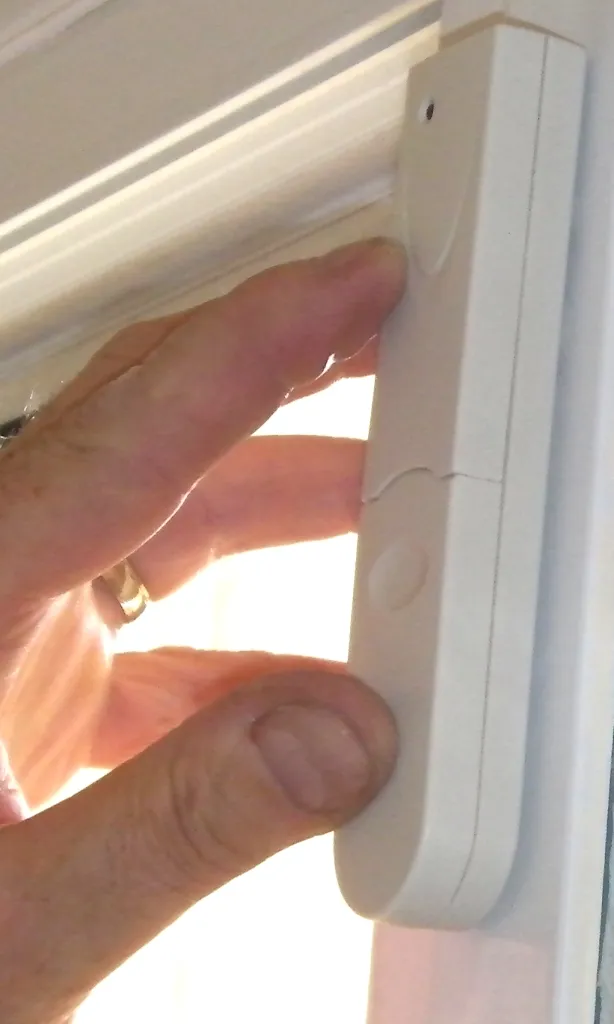
Photo: Ndamack, CC BY-SA 3.0, via Wikimedia Commons
There's a particular kind of disappointment reserved for the smart home. It's not the dramatic failure — the hub that dies, the app that disappears. It's the small, silent one: the hall light that didn't come on at 11pm, and you standing there in your socks wondering whether the battery in the landing sensor has gone, the Zigbee mesh has shifted, or the automation decided your presence wasn't convincing enough.
Nine times out of ten, the culprit is a sensor doing far more than it needs to. Which is why, after a few years of adding and — more often — removing clever kit, I've settled on a rule I've started calling the stupid sensor principle: the more brainpower you put in the input, the more you'll end up babysitting it.
What 'stupid' actually means here
It isn't an insult. A stupid sensor does one thing, does it locally, and reports back in the plainest possible terms. Contact open. Contact closed. Motion seen. Motion absent for twenty minutes. Temperature is 18.4°C. No interpretation, no scene recognition, no cloud round-trip, no subscription tier waiting in the wings.
The clever stuff — the decision-making — belongs in the hub or the automation engine, where you can see it, edit it and, crucially, break it without having to replace hardware.
The four workhorses worth defaulting to
Door and window contacts
A magnetic reed contact is about as sophisticated as a light switch. Two pieces of plastic, a magnet, and a circuit either made or broken. They cost anywhere from £8 to £25 depending on protocol, they run for years on a coin cell, and they don't care whether your internet is up.
For any routine that hinges on whether a door is open — hall lights, a porch alert, a reminder that the back door is still ajar at 10pm — this is the right tool. Not a camera with motion detection baked in, not a doorbell that also does parcel recognition. Just the contact.
PIR motion sensors
Passive infrared is old technology and all the better for it. It spots a warm body moving across its field of view and says so. Mine are mounted at the top of the stairs and in the kitchen, angled so they ignore the cat, and they've been quietly reliable for three winters now.
The trap is buying a PIR that also claims to count people, classify pets and detect falls. Every one of those features is a model running somewhere you can't inspect, and every one of them will mis-fire eventually. If you need pet immunity, buy a sensor with a documented pet-immunity spec. If you need person-counting, accept that it's a separate project with a separate budget.
Timers and schedules
Cheapest input of all, and nobody thinks of it as a sensor. A schedule in the hub — lights on at 6.45am Monday to Friday, off at 8.10am — covers an enormous share of household routines without a single battery or radio packet involved. It's the input that can never have a flat cell.
A plain thermostat
Here's the controversial one. A basic programmable thermostat with a wired or radio-linked sensor in the right room will hold a house at a comfortable temperature with no app at all. The moment you add learning algorithms and occupancy guessing, you hand over the thing you actually care about — consistency — to a model that's guessing about your household from incomplete data.
If you want per-room control, use smart TRVs with dumb temperature sensors in each room, and let the hub do the thinking. Don't buy a thermostat that thinks it knows better than the schedule you wrote.
Where clever inputs quietly cost you
Feature-heavy sensors don't usually fail loudly. They degrade into ambiguity. A few patterns I've seen repeatedly:
- Battery-drain surprises. Cameras and sensors that stream or process on-device eat cells fast. Anything that needs recharging every six weeks will, at some point, run flat unnoticed.
- Cloud dependency creep. A sensor whose automation logic lives in a vendor's app stops working when that app changes its API, its pricing, or its mind.
- Silent disagreement. Two sensors interpreting the same event differently — one says 'presence detected', another says 'person recognised' — makes debugging a nightmare because you can't tell which layer lied.
- Firmware roulette. Every update is a chance for a behaviour change you didn't ask for, on a device you can't roll back.
None of this means clever gadgets are useless. It means they shouldn't be load-bearing. Put the fancy stuff on top, never underneath.
The bench test: how to check a sensor before you trust it
Before any sensor gets wired into a routine that matters, give it a fortnight of probation. Not on the automation — just on logging.
- Pair it and do nothing else. No automations, no scenes. Let it sit.
- Turn on notifications or history in your hub so you can see every event it reports.
- Check it daily for 14 days. Note false positives: the PIR that fired when the boiler kicked in, the contact that read 'open' during a gale.
- Test the edges deliberately. Open the door slowly. Walk past the PIR at an angle. Watch for latency — if a contact takes four seconds to report, your 'lights on when the door opens' routine will always feel late.
- Kill the internet for an hour. Pull the router. Does the sensor still report to the hub? If not, it isn't a local sensor, whatever the box says.
- Check the battery line. Is it a coin cell you can buy at a supermarket, or a proprietary pack you'll be ordering from one retailer in the EU?
Fail any of those and the sensor doesn't earn a routine. That's it. No sentimentality.
Building it up sensibly
Start with the doors. Contacts on the front door, back door and any side gate cover the majority of useful triggers, and they're boring enough to forget about. Add one PIR where you actually walk. Lean on schedules for everything predictable. Keep the thermostat dumb and the thinking in the hub.
Then — and only then — consider the clever layer. Put a camera over the drive if you want one, but don't let a motion routine depend on it. Add a presence sensor if it genuinely solves a problem you have, but keep a PIR as the fallback.
The whole point is that a reliable smart home should be dull. It should work on a wet Tuesday in February when the broadband is flapping, the hub is on its third year of firmware and nobody in the house wants to open an app. Stupid inputs, sensible logic, and a setup that stops asking for your attention — that's the goal.